
-
S/4 Handloomed Checkered Placemats - Black
Vendor:Powered by PeopleRegular price $109.00 USDRegular priceUnit price per -
Jute Placemat
Vendor:Powered by PeopleRegular price $24.00 USDRegular priceUnit price per

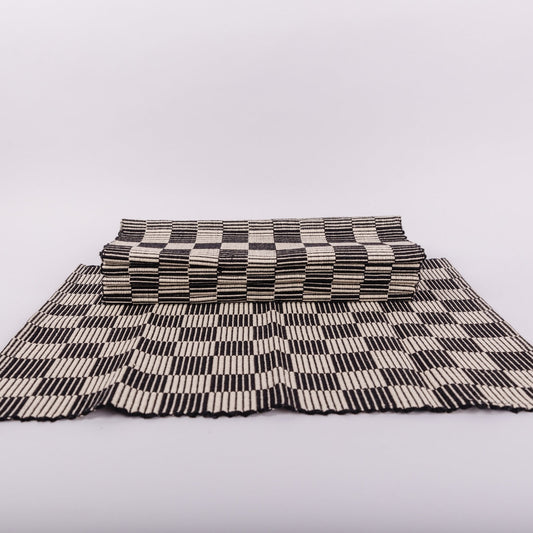


Why Buy Fair Trade Placemats?
Placemat production involves weaving, printing, or basketry techniques — craft skills concentrated in artisan communities where table textile production supports household incomes. Handwoven placemats require skilled loom operation and consistent quality across matched sets, demanding sustained attention per piece. In conventional markets, placemats are often priced as low-value items, which obscures the handcraft labor involved in artisan production.
Fair trade sourcing applies minimum pricing and wage standards that reflect actual production time and skill. For handwoven or basketry placemat producers, fair trade pricing accounts for the weaving labor per piece rather than benchmarking against printed or machine-woven alternatives. Long-term fair trade relationships provide weaving and basketry producers with the income stability to maintain their craft as a viable livelihood.
Placemats are present at every meal — seen daily and handled constantly. Choosing fair trade means the artisan labor behind them is valued appropriately, and each purchase supports a producer relationship built on equitable terms.
What is fair trade home and garden decor?
How do fair trade kitchen products support artisans?
Are artisans paid fairly for fair trade kitchen products?


Verified ethically made
Every product on The Labour Movement meets our standards for Fair Trade production.
Featured certifiers and membership organizations


